Table of Contents
Perimenopause is a natural stage of hormonal transition, but the changes it brings can extend well beyond irregular periods and hot flashes. Many women notice changes in their skin, hair, pigmentation, sensitivity and overall appearance during this stage. Dryness that was never a problem before may suddenly become persistent, previously manageable acne may return, and hair that once felt thick and healthy may gradually become finer. These changes can be frustrating, particularly when they seem to appear without an obvious explanation.
Perimenopause generally occurs during the years leading up to menopause, when hormone levels fluctuate. The NHS notes that symptoms can include changes in periods, hot flushes, sleep problems, mood changes, weight changes, vaginal symptoms, headaches, joint pain, hair thinning and skin changes.
For women experiencing noticeable perimenopausal skin and hair changes in Dubai, understanding what is happening can make it easier to choose appropriate professional care. Dermatological support can focus on specific concerns such as dryness, pigmentation, adult acne, sensitivity, fine lines, hair thinning and unwanted facial hair. Athena Dermatology Clinic’s perimenopausal support program takes a personalised approach, combining consultation, skincare recommendations and selected dermatological or aesthetic treatments according to individual concerns.
What Is Perimenopause?
Perimenopause is the transitional period before menopause. During this stage, reproductive hormone levels fluctuate, and menstrual cycles can become irregular. According to the NHS, menopause itself is defined as having no menstrual period for 12 months when hormonal contraception is not affecting the menstrual cycle.
The experience can be very different from one woman to another. Some women experience only minor changes, while others develop multiple symptoms that affect sleep, mood, work, relationships and everyday life.
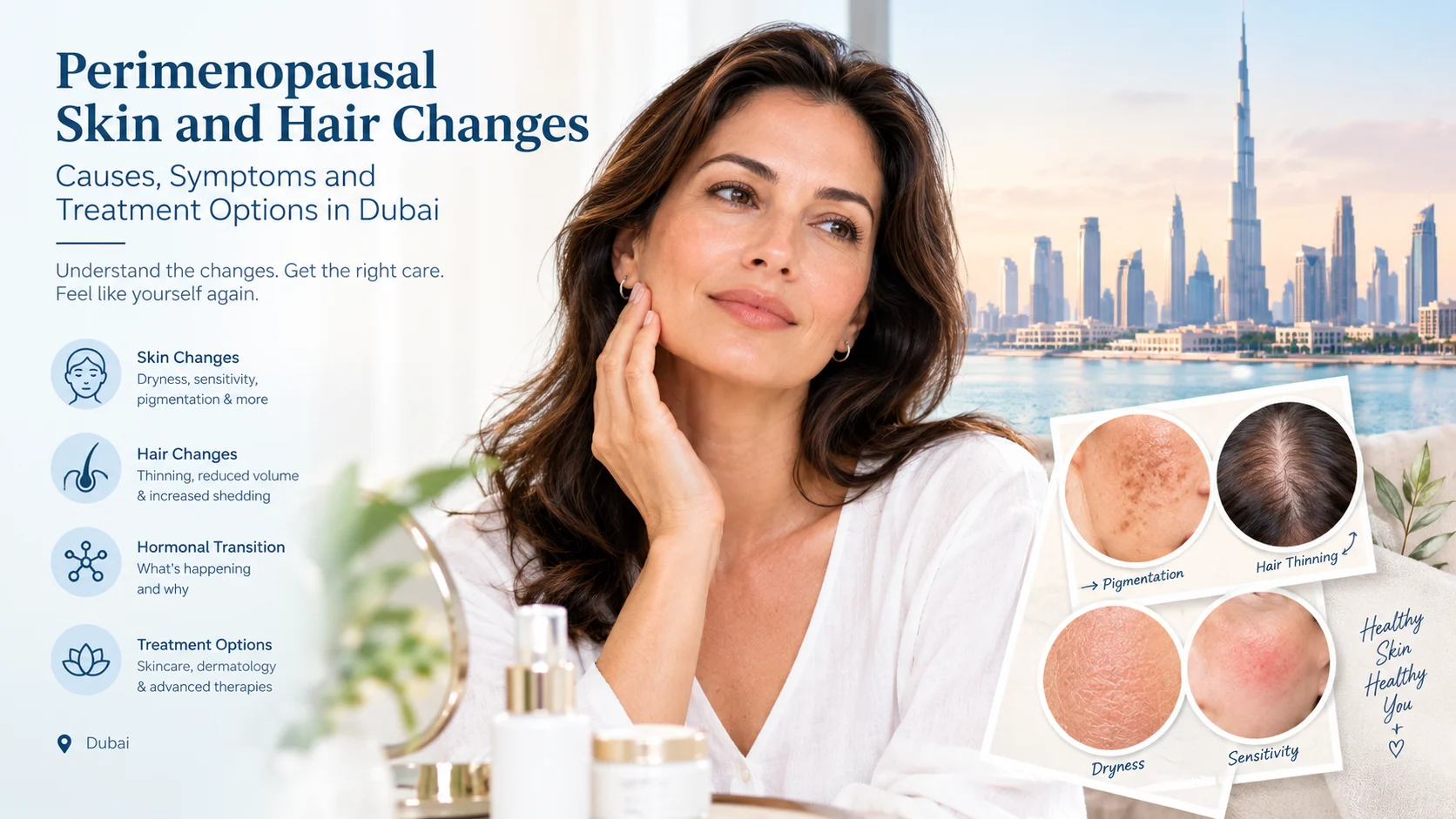
Skin and hair changes can be particularly noticeable because hormonal fluctuations can influence hydration, oil production, collagen, pigmentation and hair follicles. Athena Dermatology Clinic identifies concerns including dry skin, increased sensitivity, flushing, fine lines, pigmentation, hair thinning, adult acne and increased facial or body hair as issues that may occur during perimenopause.
How Does Perimenopause Affect Your Skin?
One of the most noticeable changes can be a shift in how the skin feels. Skin that previously tolerated multiple products may become dry, sensitive or easily irritated. Changes in hormones can influence the skin’s ability to maintain hydration, while other changes may contribute to redness, flushing and altered texture.
Athena Dermatology describes reduced estrogen levels as one factor associated with reduced hydration and increased dryness during perimenopause. It also identifies increased sensitivity and flushing, fine lines, pigmentation and adult acne among potential skin concerns during this period.
This doesn’t mean that every skin change is automatically caused by perimenopause. A dermatologist can assess your skin and determine whether hormonal changes, environmental exposure, existing skin conditions, skincare products or another factor may be contributing.
Common Perimenopausal Skin Problems
Dry and Itchy Skin
Dryness can become one of the most frustrating skin concerns during perimenopause. The skin may feel tight after cleansing, become flaky, or feel uncomfortable even when you are using products that previously worked well.
The NHS also lists dry and itchy skin among possible menopause-related symptoms.
A dermatologist can help create a perimenopause skincare routine that focuses on maintaining hydration and protecting the skin barrier. Athena Dermatology offers customised skincare recommendations designed around concerns such as dryness, sensitivity and pigmentation.
Increased Skin Sensitivity and Redness
You may also notice that your skin reacts differently to products or environmental triggers. Facial flushing and increased sensitivity can become more noticeable, and products that were previously comfortable may suddenly cause irritation.
Athena Dermatology specifically notes that hormonal changes during perimenopause can contribute to changes in skin pH, flushing and increased facial sensitivity.
Rather than continuously adding new products, it can be useful to simplify your routine and have your skin assessed professionally when persistent sensitivity develops.
Fine Lines and Loss of Firmness
Hormonal changes can also coincide with visible signs of ageing. Athena Dermatology identifies decreased collagen and elastin production as factors associated with increased fine lines during perimenopause.
Treatment options depend on the individual’s skin and goals. Depending on the assessment, options may include skin boosters, microneedling, RF microneedling, HIFU, injectables or regenerative treatments. Athena Dermatology lists these among the treatments it uses as part of its perimenopausal support approach.
Why Does Adult Acne Appear During Perimenopause?
It can be surprising to experience acne again after years of relatively clear skin. Hormonal fluctuations can influence oil production and contribute to clogged pores and breakouts.
Athena Dermatology notes that fluctuations involving androgen levels may contribute to adult acne during perimenopause. Its listed treatment options include medical-grade skincare, chemical peels and light-based treatments depending on the individual’s condition.
If acne suddenly develops in your 40s, don’t assume that aggressive acne products are automatically the answer. Mature or sensitive skin may respond poorly to overly harsh routines, making professional assessment particularly useful.
Perimenopause and Hyperpigmentation
Dark spots and uneven skin tone can become more visible during hormonal transitions. Previous sun exposure can also contribute to pigmentation, meaning that hormonal changes and accumulated environmental exposure may overlap.
Athena Dermatology identifies hyperpigmentation as one of the skin concerns associated with perimenopause and lists options such as laser treatments, IPL and chemical peels for appropriate patients.
The right treatment depends on the type and depth of pigmentation, skin type and sensitivity. A dermatologist should assess pigmentation before choosing a procedure because not every dark spot should be treated in the same way.
How Perimenopause Can Affect Your Hair
Skin isn’t the only area that can change. Hair thinning or increased shedding can also become noticeable during the menopausal transition.
The NHS includes hair thinning or hair loss among possible menopause symptoms. Athena Dermatology’s perimenopausal support program addresses hair concerns through options including PRP therapy, mesotherapy and growth-factor or exosome-based treatments, depending on the individual’s needs.
However, hair loss has many possible causes. Nutritional deficiencies, thyroid disorders, stress, genetics, medications and other medical conditions can also contribute. A professional assessment is therefore important before assuming that hormones are the only explanation.
What About Increased Facial Hair?
Some women notice new or increased coarse facial hair during perimenopause. Athena Dermatology describes this as hirsutism, referring to coarse, dark hair growth in areas where women typically have less hair, such as the face or chest.
Hormonal changes can influence the balance between estrogen and androgen activity, potentially making unwanted facial hair more noticeable. Depending on the cause and location, dermatological management may include options such as laser hair reduction.
Sudden or significant changes in facial hair should also be discussed with a healthcare professional because excessive hair growth can sometimes have causes beyond normal hormonal ageing.
Perimenopausal Skincare: Where Should You Start?
A good skincare routine during perimenopause doesn’t necessarily need to contain dozens of products. In fact, when the skin becomes more sensitive, a simpler routine can sometimes be easier to tolerate.
A sensible starting point is:
- Gentle cleansing
- Regular moisturisation
- Daily broad-spectrum sunscreen
- Avoiding unnecessary irritation
- Professional assessment for persistent pigmentation, acne or sensitivity
Lifestyle also matters. NHS guidance recommends regular exercise, a balanced diet, sufficient rest and attention to mental wellbeing during perimenopause and menopause.
For persistent skin or hair problems, however, lifestyle measures alone may not address the underlying concern. That’s where personalised dermatological care can become useful.
What Treatments Are Available for Perimenopausal Skin?
There isn’t one universal perimenopause skin treatment because different women experience different concerns. A person primarily dealing with dryness may need a very different approach from someone concerned about pigmentation, acne or loss of firmness.
Athena Dermatology lists several treatment categories within its perimenopausal support program:
| Concern | Potential treatment options |
| Dryness and dullness | Tailored skincare, skin boosters |
| Fine lines | Botox, fillers, Sculptra and selected regenerative treatments |
| Loss of firmness | HIFU, RF microneedling, selected injectables |
| Pigmentation | IPL, Q-Switched Nd:YAG, chemical peels |
| Skin texture | Microneedling, RF microneedling |
| Adult acne | Medical skincare, peels and selected light-based treatments |
| Hair thinning | PRP, mesotherapy, growth-factor/exosome treatments |
| Unwanted facial hair | Laser hair reduction |
These treatments aren’t automatically suitable for every patient. Athena Dermatology states that treatment recommendations are made following a consultation that considers the individual’s skin, hair concerns, lifestyle and goals.
Can Perimenopause Be Managed With Hormone Therapy?
Perimenopause is a medical transition as well as a dermatological one. Women experiencing broader symptoms such as hot flushes, sleep problems or mood changes may discuss treatment options with an appropriate healthcare professional.
The NHS states that HRT can help manage symptoms of perimenopause and menopause, while non-hormonal treatments are also available for people who cannot or do not want to take HRT.
It’s important to distinguish this from cosmetic or dermatological treatment. Procedures such as laser therapy, microneedling or injectables address specific skin concerns; they don’t replace medical evaluation or systemic treatment when that is appropriate.
Why Personalised Perimenopausal Support Matters
There is no single “perimenopause face” or universal treatment plan. One woman might experience dryness and pigmentation, while another might struggle primarily with acne and hair thinning. Someone else may be concerned about loss of firmness but have otherwise healthy skin.
Athena Dermatology’s approach starts with a personalised consultation, followed by a customised treatment plan and ongoing support. The clinic explains that treatment plans may combine advanced procedures, skincare recommendations and lifestyle guidance, with follow-up adjustments based on how the patient’s skin and hair respond.
That approach makes sense because perimenopause itself is a changing process. Your skin at 42 may not behave exactly the same way at 45, so your skincare and treatment strategy may need to evolve too.
When Should You See a Dermatologist?
Consider professional advice if you are experiencing persistent or bothersome changes such as sudden acne, significant dryness, ongoing irritation, pigmentation, hair thinning or increased facial hair. A dermatologist can help distinguish hormonal changes from other dermatological conditions.
You should also seek medical advice for broader symptoms of perimenopause that are affecting your quality of life. The NHS recommends speaking with a healthcare professional if you think you have perimenopause symptoms and want to understand your treatment options.
For women looking specifically for perimenopausal support in Dubai, Athena Dermatology Clinic offers a programme focused on skin and hair concerns associated with this stage of life.
Conclusion
Perimenopause can affect much more than your menstrual cycle. Changes in hormones can coincide with dryness, sensitivity, pigmentation, adult acne, fine lines, hair thinning and unwanted facial hair, making this stage feel unfamiliar even if you have always understood your skin and hair well.
The answer isn’t necessarily to buy more skincare products or pursue every available aesthetic procedure. Start by understanding what’s changing, identify the specific concern and get professional guidance when symptoms persist. A dermatologist can evaluate your skin and hair and create a treatment strategy that evolves with your needs.
For women seeking perimenopausal support in Dubai, Athena Dermatology Clinic provides personalised consultations and a range of dermatological and aesthetic options designed around individual skin and hair concerns.
FAQs
1. Does perimenopause cause dry skin?
It can. Hormonal changes during perimenopause can contribute to dryness and increased skin sensitivity. The NHS lists dry and itchy skin among possible menopause symptoms.
2. Why am I suddenly getting acne in my 40s?
Hormonal fluctuations can contribute to adult acne during perimenopause. However, other factors can also cause acne, so persistent or severe breakouts should be assessed professionally.
3. Can perimenopause cause hair thinning?
Yes. Hair thinning or hair loss can occur during menopause and perimenopause. However, other medical and nutritional factors can also contribute to hair loss.
4. What treatments can help perimenopausal skin?
Depending on your concern, options may include personalised skincare, skin boosters, microneedling, RF microneedling, HIFU, laser treatments, chemical peels and selected injectables. The appropriate treatment should be determined after a professional assessment.
5. Where can I get perimenopausal skin and hair support in Dubai?
Athena Dermatology Clinic offers a Perimenopausal Support programme covering personalised skin and hair assessment, skincare recommendations and selected dermatological and aesthetic treatments.
