
Table of Contents
Abu Dhabi traffic can increase wear on the brakes, engine, transmission, cooling system, tires, and battery. Hot weather can add another layer of stress, especially when the SUV spends long periods running at low speeds.
Because of these conditions, following only a standard mileage-based service schedule may not always be enough. Drivers should also consider driving time, traffic conditions, temperature, and vehicle use when planning maintenance.
Why Does Heavy Traffic Change an SUV’s Maintenance Needs?
Most maintenance schedules are based on mileage and time, but the way a vehicle is driven also matters. Stop-and-go traffic can place more strain on several components than steady highway driving.
When an SUV spends a lot of time in traffic, the engine may run for long periods while the vehicle covers only a short distance. The transmission changes gears repeatedly, brakes are used often, and cooling systems have less airflow.
These conditions can increase wear even when the odometer does not show a high mileage figure. Regular car service in Abu Dhabi can help identify traffic-related wear before it develops into a larger problem.
1. Frequent Braking Can Increase Brake Wear
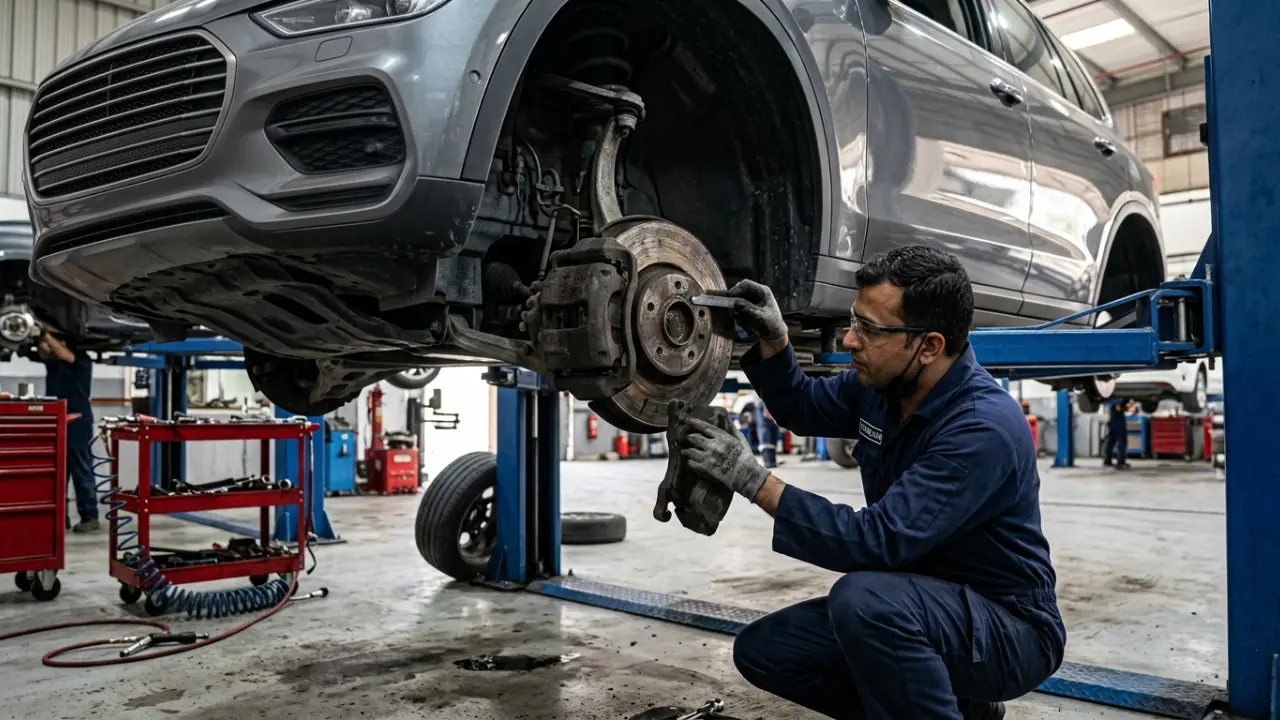
Heavy traffic means frequent stopping and starting. Drivers may need to use the brake pedal repeatedly, especially at signals, junctions, and slow-moving roads. This creates more heat and friction between the brake pads and discs.
Premium SUVs are often heavier than regular passenger cars, so their braking systems may handle greater loads. Repeated braking can gradually reduce pad thickness and increase disc wear.
Drivers should pay attention to squealing, grinding, vibration, or changes in braking response. Checking brake condition during routine service can help identify worn parts before they affect braking performance.
2. Long Idling Places Extra Demand on the Engine
An SUV can spend a significant amount of time running while barely moving in heavy traffic. During this period, the engine continues producing heat even though there is limited natural airflow through the radiator.
The cooling fan must work harder to control engine temperature. Air conditioning also places an additional load on the engine, especially during hot weather.
Long periods of idling can therefore make cooling and lubrication systems work continuously without adding much mileage. Regular checks of coolant level, engine oil, cooling fans, and temperature readings can help keep the system in good condition.
3. The Transmission May Work Harder in Stop-and-Go Traffic
Automatic transmissions constantly adjust gear selection during slow traffic. The vehicle may move forward, stop, and accelerate many times again during a single journey. This repeated operation can increase heat and wear inside the transmission.
Transmission fluid also plays an important role in controlling temperature and lubricating internal components. If the fluid becomes old or contaminated, shifting may become less smooth.
Drivers may notice delayed engagement, harsh gear changes, slipping, or unusual sounds. Following the manufacturer’s transmission service recommendations and checking for leaks can help maintain smooth operation.
4. Air Conditioning Use Can Increase System Load
Air conditioning is important for comfortable driving in Abu Dhabi, especially during hot months. In heavy traffic, the system may operate continuously while the vehicle moves slowly or remains stationary.
The compressor, cooling fans, battery, and electrical system may all experience extended use. A weak cooling system can also become more noticeable when the air conditioner is working hard. Signs such as weak cooling, unusual compressor noise, or inconsistent cabin temperature should be checked rather than ignored. Keeping the air conditioning system maintained can also help reduce strain on related components.
5. Engine Oil May Face More Severe Operating Conditions
Engine oil does more than reduce friction. It also helps control heat and protect internal engine components. Stop-and-go driving can expose the oil to repeated heat cycles and long periods of engine operation at low vehicle speeds.
An SUV that spends many hours in traffic may therefore need closer attention to oil condition than one that mainly travels on open highways.
The correct oil grade should always be used according to the vehicle manufacturer’s requirements. Oil level and service intervals should also be monitored based on the vehicle’s actual use rather than mileage alone.
6. Battery and Charging Systems Can Experience Extra Demand
Premium SUVs often contain many electrical features, including advanced screens, driver assistance systems, powered seats, climate controls, cameras, and other electronic equipment.
Heavy traffic can mean that these systems operate for long periods while the engine spends more time at idle. Repeated short trips can also limit the time available for the battery to recover its charge.
A weak battery may cause slow starting, warning messages, or unusual electronic behavior. Checking battery health and charging voltage during routine maintenance can help identify a weakening battery before it causes a starting problem.
7. Tires Can Wear Faster in Urban Driving
Tires experience different types of wear in city traffic. Frequent acceleration, braking, turning, lane changes, and parking can gradually affect tread condition.
Incorrect tire pressure can make the problem worse. Underinflated tires can increase rolling resistance and heat, while overinflation can affect grip and wear patterns. Abu Dhabi’s hot road surfaces can also add stress to tires.
Drivers should regularly check tire pressure, tread depth, sidewalls, and uneven wear. If one tire is wearing differently from the others, the vehicle may also need an alignment or suspension inspection.
8. Suspension Parts Face Repeated Movement
Premium SUVs are designed to provide a smooth ride, but their suspension still experiences wear from speed bumps, uneven surfaces, road joints, and repeated low-speed movement.
Bushings, shock absorbers, control arms, ball joints, and other suspension parts can gradually lose their performance.
A worn suspension may cause extra bouncing, knocking sounds, uneven tire wear, or reduced ride comfort.
Drivers should not assume that unusual suspension noise is normal simply because the SUV is used regularly in the city. Finding worn parts early can help prevent additional stress on connected components.
9. Cooling Systems Need Extra Attention
Heavy traffic reduces the natural airflow that normally helps cool the engine. At highway speeds, air moves through the radiator more easily, but slow traffic places greater responsibility on the cooling fans and related components.
A weak fan, low coolant level, blocked radiator, damaged hose, or thermostat problem may therefore become more noticeable during traffic.
Warning signs include rising temperature, cooling fans running unusually often, coolant smells, or visible leaks. Cooling system checks are especially important before long journeys or during periods of extreme heat.
10. Stop-and-Go Driving Can Affect Fuel Economy
Frequent acceleration and braking generally use more fuel than maintaining a steady speed. Long periods of idling also consume fuel without adding distance to the journey.
A sudden drop in fuel economy may be normal to some extent during heavy traffic, but a major or lasting change can indicate another issue.
Low tire pressure, dirty filters, poor engine performance, brake drag, or sensor problems can all affect fuel use. Tracking fuel consumption over time can help drivers notice changes that may require inspection.
Conclusion
Heavy Abu Dhabi traffic can affect the maintenance cycle of a premium SUV because the vehicle may spend long periods idling, braking, accelerating, and running its cooling and air conditioning systems.
These conditions can increase stress on brakes, transmission, engine oil, battery, tires, suspension, and cooling components. Mileage alone may not show the full level of vehicle use.
Paying attention to driving conditions, service intervals, fluid levels, warning signs, and component wear can help keep a premium SUV in good condition. Regular inspections also provide an opportunity to find small problems before they develop into more expensive repairs.
