
Table of Contents
Last updated: October 2026
Most zoos show you animals from Africa, Asia and beyond. The Arabian Wildlife Centre in Sharjah takes a different approach. It focuses on animals of the Arabian Peninsula and gives visitors a chance to understand how they survive heat, scarce water and challenging terrain.
The centre is indoors and air-conditioned, making it a practical option for families during the hotter months. It is also part of Sharjah Desert Park, so a visit can include more than just the animal exhibits.
Quick Facts
- Location: Sharjah Desert Park, Al Dhaid Road, near Interchange 9, Sharjah
- Phone: +971 6 531 1999
- Closed: Tuesday
- Typical hours: Sunday to Thursday, 9:00 am–5:30 pm; Friday, 2:00 pm–5:30 pm
- Tickets: AED 15 for adults; AED 5 for children over 12; children under 12 are free according to published information
- Time needed: Around 2–3 hours for the centre, or longer if you want to explore the wider park
Opening hours and admission arrangements can change, particularly around holidays, so check the latest details before travelling.
Where Is It?
The Arabian Wildlife Centre is located inside Sharjah Desert Park on Al Dhaid Road, near Interchange 9.
It is away from central Sharjah, so allow some extra travel time, especially during busy periods. If you are travelling by taxi or ride-hailing service, it is also worth thinking about your return journey before you arrive.
What Makes It Different?
The centre’s biggest strength is its regional focus.
Instead of taking visitors through animals from different continents, the exhibits concentrate on wildlife associated with Arabia. The experience introduces species adapted to mountains, rocky landscapes, dry plains and other environments found across the region.
This makes the visit more interesting than simply identifying animals. You can start looking at each species from another perspective: how does it survive here?
The indoor setting also makes it possible to observe animals that are naturally active at night or spend much of their time sheltering from extreme daytime temperatures.
What Animals Can You See?
The centre brings together a wide range of animals associated with the Arabian Peninsula, including:
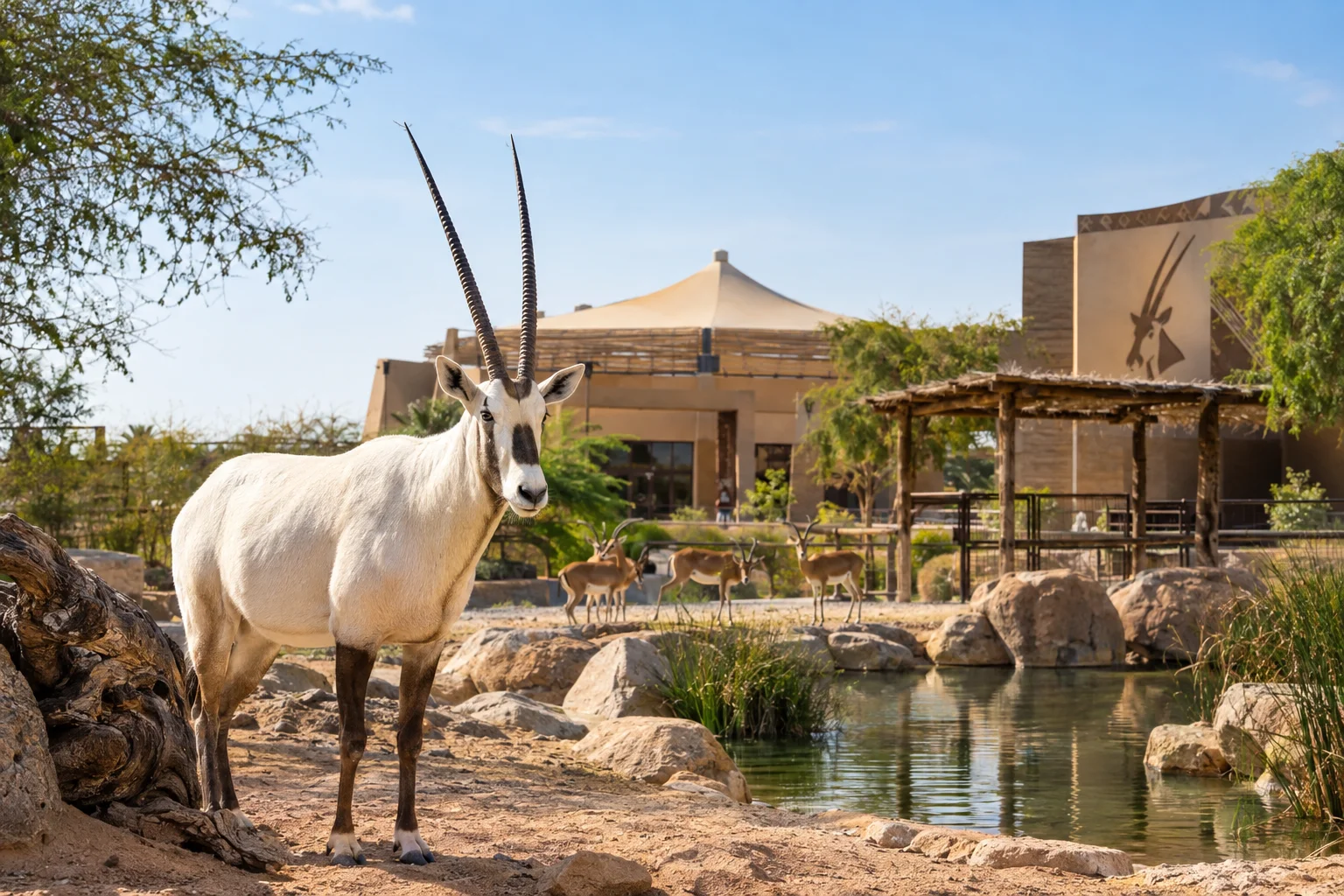
- Arabian oryx, the UAE’s national animal
- Arabian leopard
- Sand cats, foxes and other carnivores
- Gazelles and other hoofed mammals
- Falcons and other birds
- Reptiles and snakes
- Nocturnal and burrowing species
The exhibits can change, so individual animals should not be considered guaranteed on every visit.
The Arabian Oryx
With its pale coat and long, straight horns, the Arabian oryx is one of the most recognisable animals of the UAE.
Its story is also closely connected with conservation. The species disappeared from the wild in the Arabian Peninsula during the 20th century before conservation and reintroduction programmes helped establish wild populations again.
That makes seeing an Arabian oryx more meaningful than simply spotting an attractive desert animal. It is an example of what sustained wildlife protection can achieve.
The Arabian Leopard
The Arabian leopard is another species worth looking for.
Unlike the typical image of desert wildlife moving across open sand, this rare cat is associated with mountainous areas of the Arabian Peninsula.
Its survival has been affected by habitat loss, reduced prey and other pressures, leaving it critically endangered.
The wider Sharjah Desert Park also has a dedicated conservation facility for endangered Arabian wildlife. This breeding centre is a working conservation facility rather than a normal visitor attraction, so the animals kept there are not necessarily the same as those displayed to the public.
More Than a Desert
It is easy to associate the UAE’s wildlife entirely with sand dunes and camels.
The centre provides a broader picture.
Arabia contains mountains, rocky areas, wadis, coastal environments and dry plains, and different species have developed their own ways of coping with these surroundings.
That is one of the most useful things about the experience: it shows that the natural environment of the Arabian Peninsula is more varied than it may first appear.
What Else Is in Sharjah Desert Park?
The wildlife centre is only one part of Sharjah Desert Park.
The wider site includes attractions such as:
- Natural History and Botanical Museum
- Children’s Farm
- Islamic Botanical Garden
- Conservation facilities for endangered Arabian wildlife
This means you can turn the visit into a wider nature and educational outing rather than stopping after the main animal exhibits.
Some parts of the park are outdoors, so the weather becomes more important if you plan to explore the whole site.
Visiting With Children
The centre works particularly well for families.
Children can see animals they may otherwise only encounter in books, documentaries or photographs. The different species also provide an easy way to introduce children to ideas such as habitats, food chains and conservation.
Instead of simply asking them to name an animal, try questions such as:
- How does it cope with extreme heat?
- What does it eat?
- How much water does it need?
- Where does it live in the wild?
- Why is its population declining?
- What can people do to protect it?
That can turn a simple family outing into a much more engaging learning experience.
Best Time to Visit
The wildlife centre is indoors and air-conditioned, so it can be visited throughout the year.
If you also want to explore the outdoor parts of Sharjah Desert Park, the cooler months are generally more comfortable. October through April can be a better choice for spending additional time outside.
Weekday visits may also be preferable if you want a quieter experience.
Tips Before You Go
Check the Opening Hours
The centre is closed on Tuesdays, while Friday has different opening hours from the rest of the listed days. Public holidays and special occasions can also affect schedules.
Give Yourself Enough Time
A rushed visit can make the experience feel much smaller than it actually is. Allow around two to three hours if you want to explore the centre at a comfortable pace.
If you plan to visit other parts of Sharjah Desert Park, give yourself additional time.
Dress for the Weather
The main wildlife centre is indoors, but the wider park includes outdoor areas. Comfortable clothing and footwear are useful if you plan to explore beyond the main building.
Plan Your Transport
Because the park is outside central Sharjah, consider how you will get back before starting your visit, particularly if you are relying on taxis or ride-hailing services.
Take Your Time With the Smaller Species
The larger animals naturally attract attention first, but don’t overlook the reptiles, smaller mammals and nocturnal species.
They often provide some of the most interesting examples of how wildlife has adapted to life in Arabia.
Is It Worth Visiting?
Yes, particularly if you want to explore a different side of the UAE.
The Arabian Wildlife Centre is not simply about seeing animals behind glass. Its regional focus gives visitors a better understanding of the species that belong to Arabia and the challenges they face in their natural environments.
For families, it offers an easy educational outing. For wildlife enthusiasts, it provides an opportunity to see species that are rarely encountered in everyday life. And for anyone curious about the UAE’s natural heritage, it offers a useful reminder that the country has a wildlife story of its own.
The combination of an indoor wildlife experience and the wider attractions at Sharjah Desert Park also makes it possible to build a much fuller day around the visit.
Frequently Asked Questions
Where is the Arabian Wildlife Centre?
It is located inside Sharjah Desert Park on Al Dhaid Road, near Interchange 9 in Sharjah.
Is the Arabian Wildlife Centre indoors?
Yes. The main wildlife centre is an indoor, air-conditioned attraction. Other areas of Sharjah Desert Park are outdoors.
How much does entry cost?
Published admission information lists AED 15 for adults and AED 5 for children over 12, while children under 12 are listed as free. Prices can change, so check the latest details before visiting.
Which day is the centre closed?
The centre is closed on Tuesdays.
How long does a visit take?
Around two to three hours is a reasonable amount of time for the wildlife centre. If you want to explore the wider desert park, allow additional time.
Is it suitable for children?
Yes. The variety of animals makes it suitable for families, while the wider park also offers the Children’s Farm and other educational attractions.
Can I see the Arabian leopard?
The Arabian leopard is among the important species associated with the centre, but animal displays can change. The separate breeding facility for endangered Arabian wildlife is a conservation operation and is not open to the public.
Is it worth visiting during summer?
Yes. The main wildlife centre is indoors and air-conditioned, making it a practical option during hot weather. If you want to explore the outdoor areas as well, cooler months are more comfortable.
