
Table of Contents
Mohammed Bin Zayed City, commonly known as MBZ City, is a residential district on Abu Dhabi’s mainland, located between Mussafah and Zayed City and spread across 34 numbered zones. It’s known for spacious, relatively affordable villas, a strong expat family presence, and a layout built around wide, uniform streets rather than a waterfront or a single showpiece attraction. Rents typically run from AED 32,000 for a studio to over AED 240,000 for a large villa, and the commute to central Abu Dhabi averages 20–30 minutes. This guide breaks down what actually matters if you’re considering a move — rent by zone, schools, commute reality, and honest trade-offs — without recycling the same listings copy every other page runs.
Mohammed Bin Zayed City in 60 Seconds: The Snapshot
- Full name: Mohammed Bin Zayed City (also written Mohamed Bin Zayed City)
- Named after: HH Sheikh Mohamed bin Zayed Al Nahyan, President of the UAE
- Location: Abu Dhabi mainland, between Mussafah and Zayed City (Khalifa City C)
- Size: Roughly 45 square kilometres
- Layout: 34 numbered zones, each functioning as a semi-independent sub-community
- Dominant property type: Villas (2–8 bedrooms), plus townhouses and low-to-mid-rise apartments
- Distance to central Abu Dhabi: 22–30 minutes by car (roughly 31 km)
- Distance to Dubai: 70–75 minutes by car (roughly 122 km)
- Main highways: E11 (Sheikh Khalifa Bin Zayed Road), E311/E30 (Sheikh Mohammed Bin Zayed Road), E22 (Al Ain Road)
- Typical villa rent: AED 72,000 – 240,000+ per year, depending on size and zone
- Typical apartment rent: AED 32,000 – 90,000 per year
If you only remember one thing about Mohammed Bin Zayed City, make it this: it trades a longer commute for significantly more space per dirham than almost anywhere else in Abu Dhabi.
Where Exactly Is MBZ City, and Why Does the Layout Matter?
This district sits on the mainland, tucked between Mussafah to the south and Zayed City to the north, close to Abu Dhabi International Airport. Unlike waterfront developments such as Yas Island or Saadiyat Island, this community was never designed around a coastline or a single showpiece attraction. It was designed around grid logic — wide, uniform streets, and repeatable villa blocks that could be built out zone by zone as demand grew.
That grid is the reason the zone number matters more here than almost anywhere else in the city. Ask a resident “where do you live?” and the answer is rarely just the district name — it’s “Zone 14” or “Zone 22.” Each zone has its own micro-personality:
- Zones close to Mazyad Mall (roughly Zones 1–8) — shortest walk to retail, generally quicker access to Mussafah for work commutes
- Mid-numbered zones (9–20) — the bulk of standalone family villas, quieter, more residential density
- Higher-numbered zones (20–34) — some of the newer, more modern villa stock, with contemporary Arabic-influenced architecture
This isn’t cosmetic. Two villas both in the same district can differ by 15 minutes of daily commute time and thousands of dirhams in annual rent, purely based on which zone they sit in. Anyone comparing listings should always check the zone number before comparing prices.
Housing in MBZ City: What You’ll Actually Find
Mohammed Bin Zayed City built its reputation on villas, but the housing mix has diversified over the past few years.
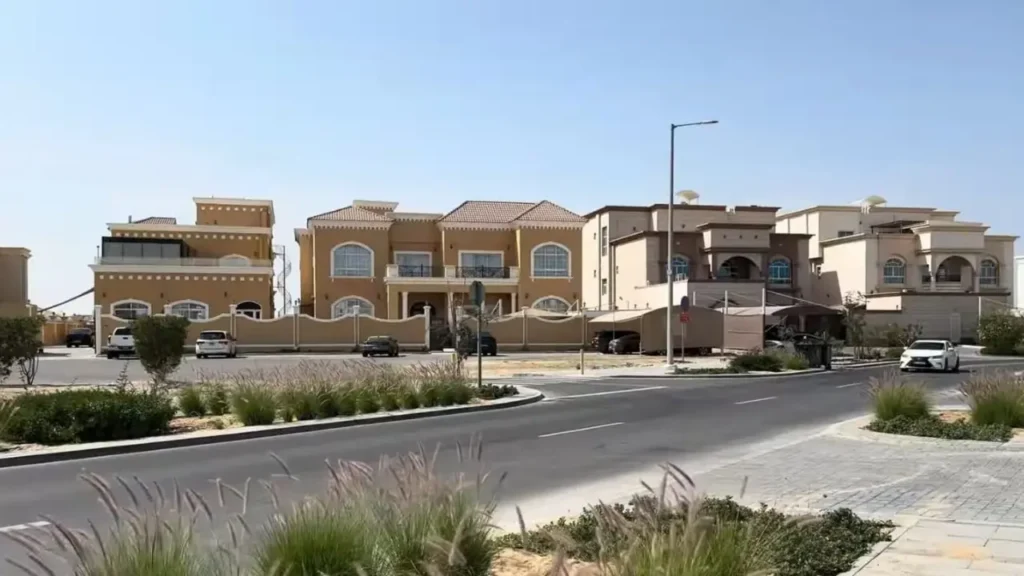
Property Types
- Standalone villas — 2 to 8 bedrooms, typically with private parking, a garden or yard, and sometimes a private pool. Built largely by developers including Aldar.
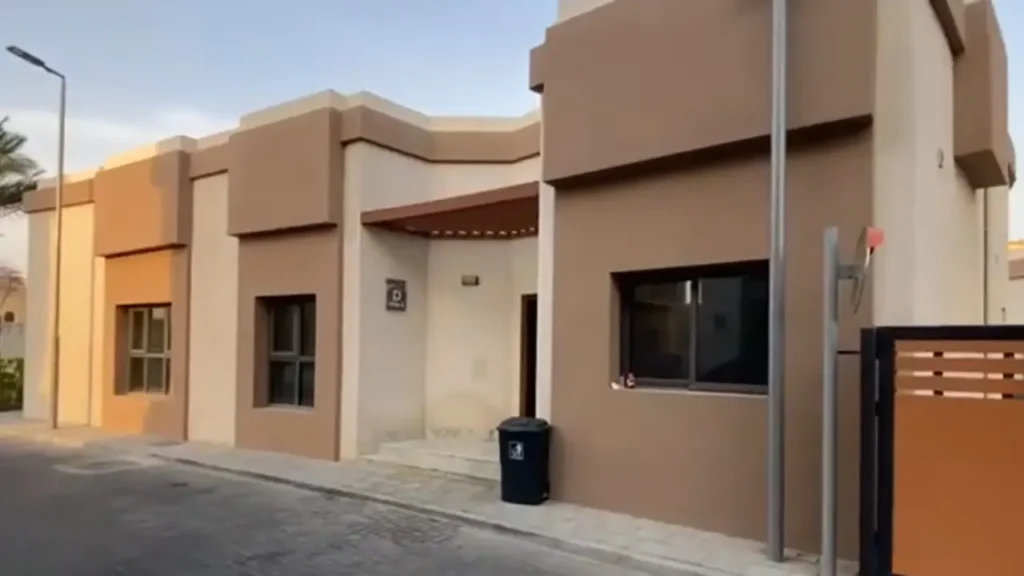
- Compound villas — Grouped within secured, gated developments such as Mohamed Bin Zayed Centre, offering shared pools, gyms, and 24-hour security.
- Townhouses — A middle-ground option between apartment living and a full standalone villa.
- Low- to mid-rise apartments — Studios through 3-bedroom units, concentrated along main arteries and closer to Khalifa City, aimed at singles, couples, and smaller households.
What Rent Actually Costs Here
| Property Type | Typical Annual Rent (AED) | Best Suited For |
|---|---|---|
| Studio / 1-bed apartment | 32,000 – 55,000 | Singles, young professionals |
| 2–3 bed apartment | 45,000 – 90,000 | Couples, small families |
| Standalone 3–4 bed villa | 95,000 – 160,000 | Families needing space, single income |
| Standalone 5–6 bed villa | 140,000 – 240,000 | Larger or multi-generational families |
| Compound villa (Mohamed Bin Zayed Centre and similar) | 150,000 – 240,000+ | Families prioritizing security and shared amenities |
A useful benchmark: the average annual rent across all property types in Abu Dhabi sits well above AED 100,000, while this community routinely delivers comparable or larger floor plans below that mark. That gap — more square footage for less money — is the single biggest reason people move here.
A note most listings skip: ask specifically whether DEWA (utilities) and maintenance are included in the quoted rent. In the older villa stock here, “water and electricity included” is a common but not universal clause, and it can shift your real monthly cost by several hundred dirhams.
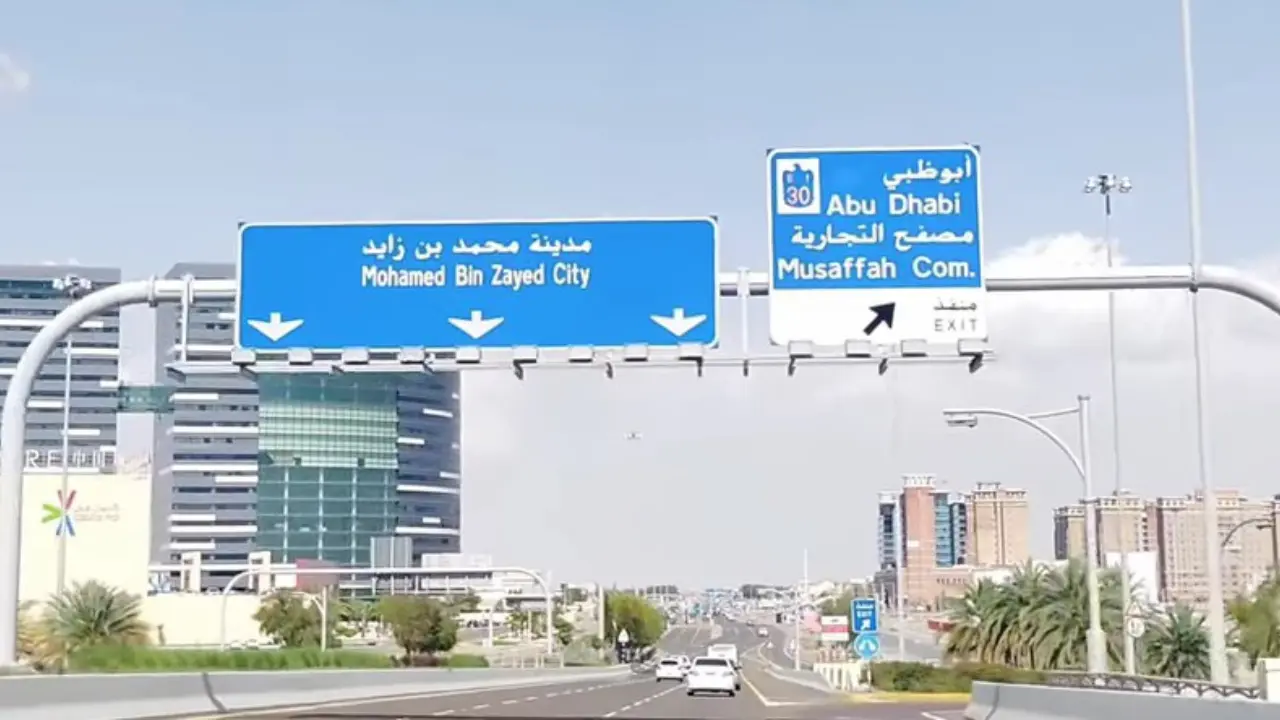
Getting Around MBZ City: Roads, Buses, and the Commute Reality
Connectivity here is genuinely good on paper — three major highways run through or alongside the district — but “good connectivity” and “short commute” aren’t the same thing, and it’s worth separating the two honestly.
Road Access
- E11 (Sheikh Khalifa Bin Zayed Road) — main link toward Dubai and northern Abu Dhabi
- E311/E30 (Sheikh Mohammed Bin Zayed Road) — connects toward central Abu Dhabi and Mussafah
- E22 (Al Ain Road) — route toward Al Ain and the Al Wathba area
Realistic Travel Times From Here
| Destination | Approximate Drive Time |
|---|---|
| Downtown Abu Dhabi / Corniche | 20–30 minutes |
| Sheikh Zayed Grand Mosque | 12–17 minutes |
| Dalma Mall | 10–12 minutes |
| Yas Island / Ferrari World | 20–25 minutes |
| Dubai | 70–75 minutes |
| Abu Dhabi International Airport | 15–20 minutes |
Public Transport
This district is not a walk-everywhere community, and public transport works best as a supplement rather than a replacement for a car. Department of Transport buses (routes including M1, M2, and several others depending on the source and update cycle) connect the local bus station to Mussafah and central Abu Dhabi. Taxis and ride-hailing apps like Careem and Uber operate throughout the area without issue, and local taxi fares typically start around AED 12 for short trips.
The honest verdict: if your job is in central Abu Dhabi, budget 20–30 minutes each way during normal traffic and expect that to stretch during peak hours. If you commute to Mussafah’s industrial zones, this location is genuinely convenient — some residents get there in under 15 minutes.
Schools and Nurseries in MBZ City
Families choosing this community are usually choosing it because of the schooling options, not despite them. The area has built a strong reputation, in particular, among Indian expat families, supported by a dense cluster of CBSE-curriculum schools.
| School / Nursery | Curriculum | Notes |
|---|---|---|
| Bright Riders School | Indian (CBSE) | Well-established, strong local reputation |
| Ajyal International School | British | Located directly within the community |
| Al Wahda International Private School | American | Popular with expat families |
| Emirates Future International Academy | CBSE | Located in nearby Mussafah |
| The Cambridge High School | British (National Curriculum for England) | Primary through Sixth Form |
| Diyafah International School | British | Modern facilities |
| British Orchard Nursery | Early years | One of several nursery options |
| Rainbow Nursery / Little Helpers Nursery | Early years | Community-level nursery care |
If schooling is your top priority, it’s worth confirming waitlists directly with each institution — CBSE schools in particular fill up quickly given the concentration of Indian families in the area.
Healthcare in and Around the Community
Medical access here is solid for day-to-day needs, with specialist and hospital-level care generally requiring a short drive to Mussafah or central Abu Dhabi.
- Bareen International Hospital — full-service hospital within the community
- Burjeel Medical City — nearby major hospital network
- Madinat Mohammed Bin Zayed Healthcare Center — government-run primary care
- LLH Hospital, Lifecare Hospital, Mediclinic (Mussafah) — a short drive away
- Aster Clinic, Oasis Medical Centre, Ever Care Medical Clinic (Mussafah) — additional private clinic options
- 24-hour pharmacies are distributed across most numbered zones
Shopping, Dining, and Daily Life
Malls and Retail
- Mazyad Mall — the community’s anchor mall, with a LuLu Hypermarket, banks, pharmacies, a gym, a food court, and casual dining
- Dalma Mall — roughly 10–12 minutes away, one of Abu Dhabi’s largest malls, with a cinema and an indoor adventure park
- Capital Mall (Mussafah) — retail, fitness centers, and children’s play areas
- Bawabat Al Sharq Mall — accessible within around 10 minutes
Supermarkets
Earth Supermarket, Little Star Supermarket, Al Madina Hypermarket, and Safeer Centre cover daily grocery needs within the community itself, with Carrefour and Spinneys a short drive away in Mussafah or Dalma Mall.
Restaurants
Expect a strong mix of Indian, Arabic, and international casual dining, plus the usual mall food courts. The community’s demographic mix — heavily South Asian, Filipino, and Middle Eastern expat families — shows up directly in the food scene, with authentic South Asian and Middle Eastern family-run restaurants scattered throughout the zones rather than concentrated in one strip.
Parks, Fitness, and Leisure
This community’s biggest quality-of-life win for families is space — and that extends to green areas.
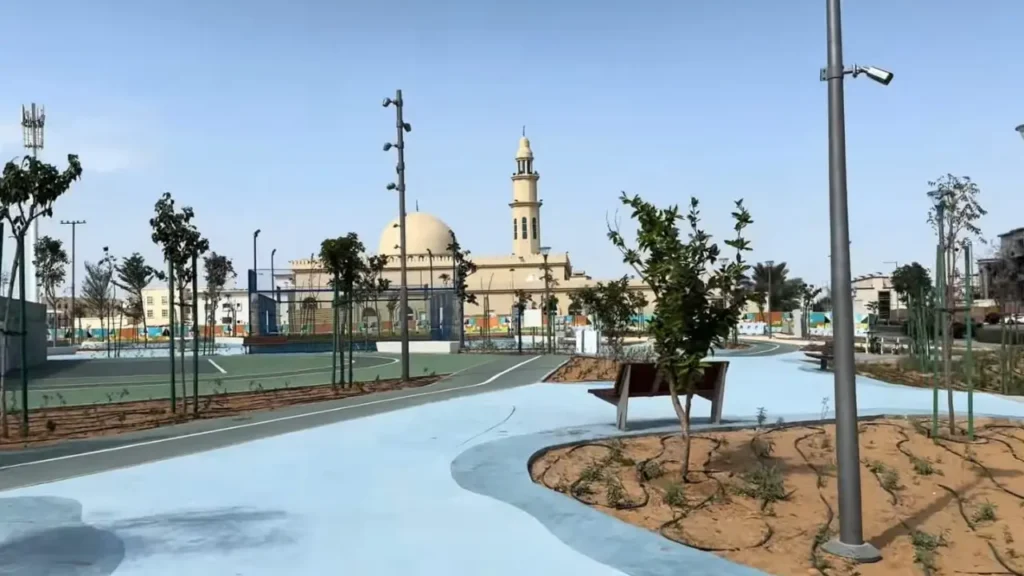
- Mohammed Bin Zayed City Public Park — landscaped lawns, running tracks, walking paths, and children’s play structures
- Numerous smaller zone-level parks and playgrounds
- Gyms including Future Fit, Uform Fitness Gym (Mazyad Mall), and Leen Fitness Club (women-only)
- Salons and spas such as La Riche Spa Lounge and a branch of N.Bar
Landmarks Within Reach
- Sheikh Zayed Grand Mosque — around 12–17 minutes away
- Ferrari World Abu Dhabi — roughly a 24-minute drive
- Khalifa Park — landscaped gardens, a museum, and a library
Who Should Actually Live in MBZ City?
Most area guides dodge this question. Here’s a straighter answer.
This community makes sense if you:
- Need real space — a 3+ bedroom villa — on a mid-range budget
- Have a car and don’t mind driving for most errands and commutes
- Value a quiet, low-density, family-oriented environment over nightlife or waterfront living
- Work in Mussafah, the wider industrial belt, or can tolerate a 20–30 minute commute to central Abu Dhabi
- Want access to CBSE, British, or American curriculum schools without paying premium-district tuition-adjacent rents
It’s probably not for you if you:
- Want to walk to work, restaurants, or the beach
- Need to be within 10 minutes of Abu Dhabi’s central business district daily
- Prioritize nightlife, waterfront dining, or a more cosmopolitan, high-rise lifestyle — that’s Al Reem Island or Corniche territory
- Are commuting into Dubai daily — 70+ minutes each way adds up fast
The Trade-Offs, Stated Plainly
| What You Gain | What You Give Up |
|---|---|
| More square footage per dirham than almost anywhere in Abu Dhabi | Distance from the Corniche, Al Maryah Island, and central business districts |
| A genuinely quiet, family-first, low-density environment | Heavy car dependency — public transport is limited |
| A dense concentration of budget-friendly schools across curricula | Fewer high-end dining, nightlife, and entertainment options nearby |
| Reasonably strong highway access to Dubai, Al Ain, and central Abu Dhabi | Traffic during peak commute hours can meaningfully extend drive times |
| A large, established expat community, especially South Asian families | Limited hotel and short-stay accommodation options for visitors |
Frequently Asked Questions About MBZ City
Is MBZ City a good place for families?
Yes — it’s consistently regarded as one of Abu Dhabi’s more family-friendly districts, largely due to spacious villas, numbered zones with their own parks, and a strong cluster of schools across multiple curricula.
How far is Mohammed Bin Zayed City from central Abu Dhabi?
Around 31 km, translating to roughly 20–30 minutes by car depending on traffic and which zone you’re starting from.
Can you commute from here to Dubai?
Yes, though it’s a real commitment — around 122 km and 70–75 minutes each way under normal traffic conditions.
What’s the difference between the numbered zones?
Each of the 34 zones functions almost like its own micro-neighbourhood, with its own mosque, small retail cluster, and villa style. Lower-numbered zones tend to sit closer to Mazyad Mall and Mussafah; higher-numbered zones often have newer villa construction.
Is it better for renting a villa or an apartment?
Villas are this community’s core strength and where the value proposition is strongest. If you specifically want an apartment, you’ll still find options — particularly near Khalifa City — but the rent advantage over other Abu Dhabi neighbourhoods is less dramatic than it is for villas.
Are there gated or compound-style options?
Yes. Developments such as Mohamed Bin Zayed Centre offer private and semi-private villas within a secured compound, with shared pools and gyms, typically renting from around AED 150,000 to 240,000 annually.
What is the zip code for this area?
The UAE doesn’t use a postal/zip code system. Where one is required by a form, 00000 is the standard placeholder used for Abu Dhabi addresses, including this district.
Final Verdict: Is MBZ City Worth It?
Mohammed Bin Zayed City won’t suit someone chasing a waterfront view or a five-minute commute to a downtown office. But if the priority is genuine living space, a settled family environment, strong school access, and rent that doesn’t dominate the monthly budget, it remains one of the most rational choices on the Abu Dhabi mainland — and the trade-off is almost entirely one thing: time spent in the car. Once you accept that trade, the rest of what this community offers holds up well against nearly any comparable Abu Dhabi suburb.