
Table of Contents
Moving goods between production lines, warehouses, and delivery points can become costly when every item needs its own carton. Individual boxes work well for small or fragile products, but they can take up extra space and require more packing materials.
For manufacturers handling large amounts of goods, bulk containers may offer a simpler and more cost-effective option. Manufacturers should consider bulk containers when moving large quantities of similar products, handling heavy parts, or reducing packaging waste.
They can improve storage, speed up loading, and make goods easier to move between work areas. Businesses exploring durable options for industrial storage and transport can consider Crateco Pack LLC, a plastic pallet box supplier, when comparing packaging solutions for repeated use.
Key Situations Where Bulk Containers Are a Better Choice
1. When Moving Large Quantities of Similar Products
Bulk containers are useful when manufacturers need to move many similar items in one shipment. Instead of packing every item into a separate carton, workers can place several products in one large container.
This reduces the number of packages that need to be packed, labeled, and moved. It can be especially helpful for factories that produce large batches of the same part or product.
Fewer individual packages can make daily handling faster and help teams manage high production volumes.
2. When Products Are Heavy or Difficult to Handle
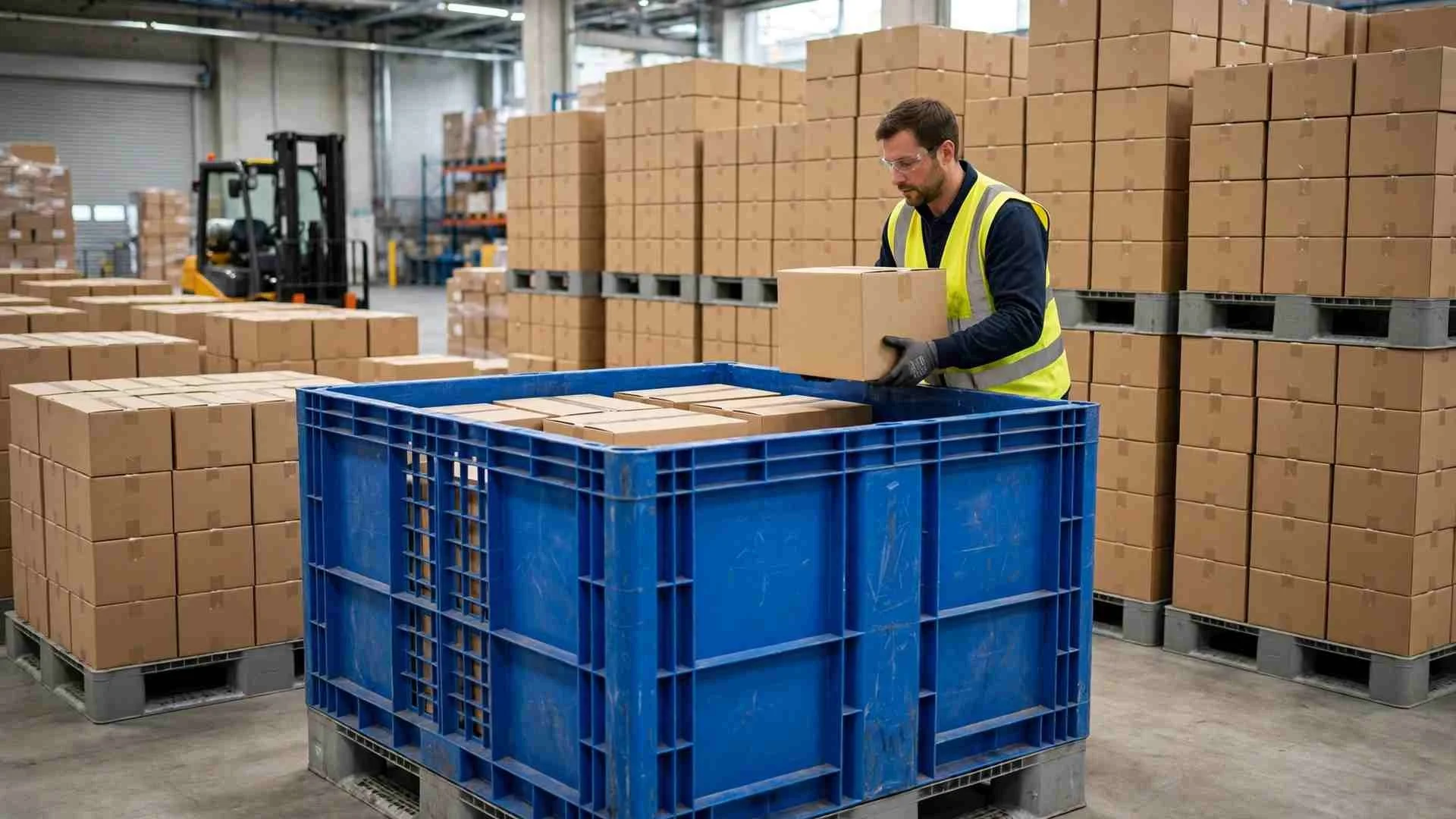
Heavy products can be difficult to pack and move in individual cartons. Boxes may tear under the load, become hard to lift, or need extra materials for support. Bulk containers designed for industrial use can carry several heavy items and work with forklifts or pallet jacks.
This can reduce manual handling and make movement between production areas safer. Manufacturers should always check the container’s load limits and choose a design that suits the weight and shape of their products.
3. When Warehouse Space Is Limited
Storage space is expensive, and poor use of it can slow down warehouse work. Bulk containers can help manufacturers organize products in fewer, larger units instead of storing many separate cartons.
Some designs can be stacked when full and nested or folded when empty, depending on the container type. These features can help businesses make better use of floor space.
Before changing packaging systems, manufacturers should check container dimensions, rack sizes, aisle widths, and the height available for safe stacking.
4. When Products Do Not Need Individual Protection
Individual cartons are often needed for products that are fragile, sensitive, or sold directly to customers. However, some industrial goods can be moved together without separate outer boxes.
Examples may include metal parts, plastic components, fasteners, and certain raw materials. For these products, bulk containers can reduce the need for extra packaging.
Manufacturers must still consider whether items could scratch, bend, mix together, or damage one another during movement.
5. When Packaging Waste and Costs Need to Be Reduced
Individual cartons require cardboard, tape, labels, and sometimes plastic wrapping or filling materials. For manufacturers shipping large quantities, these supplies can add up over time.
Bulk containers can reduce the amount of single-use packaging needed, especially when the same containers can be returned and used again.
This may lower material costs and reduce waste. However, businesses should compare the full cost of each system, including container purchase, cleaning, repairs, storage, and return transport.
6. When Goods Move Repeatedly Between Production Sites
Manufacturers with several production lines or sites often move parts and materials between locations. Packing every item into a separate carton can create extra work at each transfer point.
Bulk containers can help teams move larger quantities in a consistent way. Standard container sizes can also make it easier to use the same handling equipment across different sites.
Businesses should set common rules for loading, labeling, cleaning, and returning containers so that every location follows the same process.
7. When Forklift Handling Is Part of Daily Operations
Bulk containers can be a practical choice in factories and distribution centers where forklifts move goods throughout the day. Instead of lifting many small cartons separately, workers can move a complete container in one operation.
This can reduce handling time and limit the number of times products are touched. Fewer handling steps may also lower the risk of dropped boxes and misplaced items. The container must be designed for the handling equipment and used according to its safe operating limits.
8. When Bulk Containers Are Not the Best Choice
Bulk containers are not suitable for every product or delivery method. Fragile items, products that need separate retail packaging, and goods that must remain fully separated may still require individual cartons.
Small orders sent directly to customers may be easier to manage in standard boxes. Bulk containers can also create extra costs if they must travel long distances back to the manufacturer or if customers cannot return them. Businesses should assess the product, shipping route, and customer needs before making a change.
Conclusion
Manufacturers should use bulk containers when moving large quantities of similar goods, handling heavy products, saving warehouse space, or reducing the need for single-use packaging.
They can make repeated transfers easier and help lower handling time when the products are suitable for shared storage. However, businesses must still consider product protection, container strength, forklift access, and return costs.
By comparing product requirements, handling needs, and the total cost of use, manufacturers can choose a packaging system that protects goods, reduces waste, and supports smooth daily operations.
