
Table of Contents
Al Dhaid Fort is a restored 200-year-old desert fort in the Central Region of Sharjah, and it costs nothing to enter. It opens Saturday to Thursday from 8:00 AM to 8:00 PM, and on Friday from 4:00 PM to 8:00 PM. Inside, a small museum covers the oasis town, its tribes, falconry and the falaj water channels that made the palm farms possible.
Plan for about an hour at the fort. Then walk the oasis behind it, or drive on to Sharjah Safari nearby. This article covers the history, what to see inside, timings, entry fee, how to get there, and how to build a half day around the visit.
Where the Fort Stands
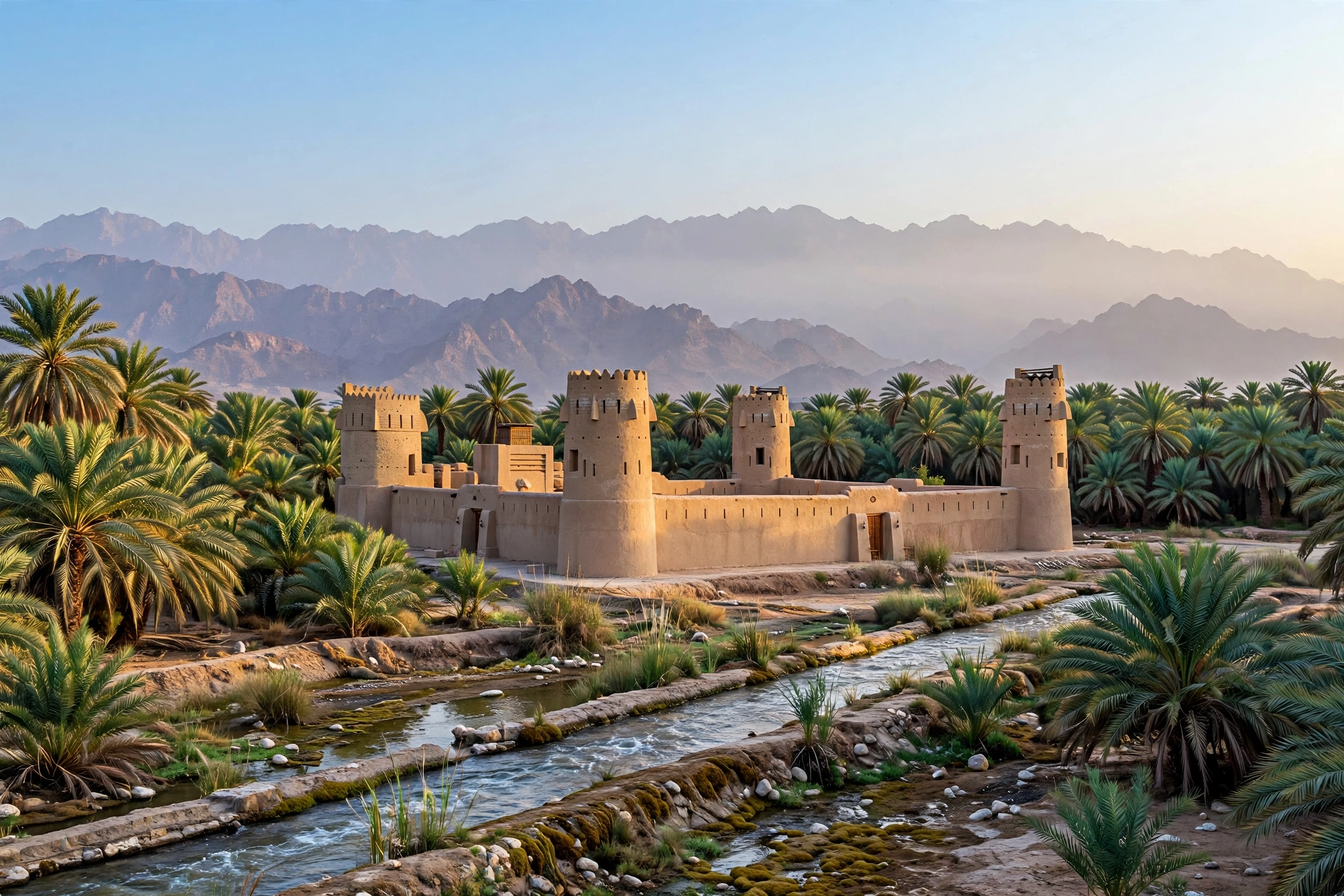
Al Dhaid is the main town of Sharjah’s Central Region and the second biggest city in the emirate. It sits on a desert plain at the foot of the Hajar Mountains, about 60 km east of Sharjah city.
The town grew around a fertile oasis. Water from the mountains feeds the falaj channels that run through the date palm plantations, and that water is the reason a settlement existed here at all.
The fort stands at the edge of the old town, beside one of those channels. In the past, caravans travelling between the coast and the interior stopped here to rest and take on water and food. That crossing point is what made the town worth guarding.
Today the fort is easy to reach by road and makes a simple half-day trip from Sharjah city or Dubai. It suits history lovers, families with children, and anyone who wants a quiet break from the malls and beaches of the coast.
A Short History
Al Dhaid Fort was built in 1820 under Sheikh Sultan bin Saqr Al Qasimi, the ruler of Sharjah at the time. He used it as his seat when staying in the town, and it guarded the oasis and the caravan route that passed through it.
The fort is a square building, about 32 metres by 26 metres, with a tower at each corner. One tower held the prison, and another held the sheikh’s living quarters. The other rooms served as stores, a kitchen and a grain store.
For many years the fort stood as a ruin, hidden behind the old police station at the edge of town. Drivers passing through Al Dhaid would not have known it was there. Restoration work brought it back to its former shape, and it reopened in 2022 as a heritage site with a museum inside.
In 2023 the fort and the Falaj Al Dhaid were inscribed on the ICESCO World Heritage List. That listing recognises the site as part of the shared heritage of the Islamic world. It also put the town on the map for visitors who follow heritage sites across the country.
The fort has since joined the Sharjah Light Festival as a venue. During the festival, light projections play across its walls after dark, and the heritage area in front fills with visitors.
Why the Oasis Mattered
The falaj is the key to understanding this place. It is a system of channels that carries mountain water to the farms, and it has watered the plantations of Al Dhaid for generations.
Without the falaj, there would have been no oasis, no farms and no town. The fort existed to protect that water and the people who depended on it. Inside the museum, a display explains how the channels were built and maintained, and you can see a stretch of the old channel in the courtyard.
What to See Inside
Inside Al Dhaid Fort, the ground floor rooms now hold a small museum. The walkway around the courtyard is enclosed in glass and air conditioned, so the visit stays comfortable even in the hotter months. Guides are usually on hand to explain more about the displays.
The documents hall
This room draws on British archives and local writings about the fort and the region. It sets out the story of the town, its rulers and its place on the caravan routes. Start here if you want the history in order before you look at the objects.
The arms hall
The arms hall runs from stone arrowheads of the fourth millennium BC through swords, daggers, armour and firearms. It is a compact display, but it covers a long stretch of time and shows how the town defended itself across the centuries.
The sheikh’s room and the liwan
The sheikh’s room sits in one of the corner towers, in the quarters where the ruler stayed. Next to it, a shaded liwan carries murals of the caravan routes, with camel models and trade goods. The murals give a good sense of the journeys that once passed through the oasis.
The kitchen, grain store and date press
The kitchen and grain store show how food was prepared and kept in the fort. A display on making date molasses sits in the madbasa, the date press room. Dates were the main crop of the oasis, so this room connects the fort directly to the farms outside its walls.
The courtyard
The courtyard is the heart of the building. It has shaded seating and a coffee shop, and you can see a part of the old falaj channel running through it. Take a few minutes here before you leave, since it is the best place to picture the fort as a working building rather than a museum.
Outside the fort are a new mosque and a children’s play area with traditional wooden swings and seesaws. Events are held at the fort and the heritage area in front of it through the year.
Timings and Entry Fee
Al Dhaid Fort opens six days a week, with shorter hours on Friday. Entry is free, and there is no need to book ahead.
| Day | Opening hours |
|---|---|
| Saturday to Thursday | 8:00 AM to 8:00 PM |
| Friday | 4:00 PM to 8:00 PM |
Arrive at least an hour before closing so you have time for the museum rooms and the courtyard. Friday mornings are the one time to avoid, since the fort stays shut until the late afternoon.
Timings can change on public holidays and during Ramadan. Check before you travel if your visit falls on a holiday, or call the site on the day.
How to Get There
A car is the practical choice. The fort, the oasis and the other sights of the Central Region sit several kilometres apart, and taxis between them are scarce.
By car
Take the E88, the Sharjah to Al Dhaid Road, east from Sharjah city. The drive takes about 45 minutes from Sharjah city and 50 to 60 minutes from Dubai, depending on traffic. From Dubai, connect to the E88 from the E11 or the E611.
The Al Dhaid Road route is the same road most drivers use for the Central Region, and the fort sits at the end of it in the town. Follow the road to the police roundabout at the top of Al Dhaid Road, and you will see the fort on your left.
There is a 300-space car park shared by the fort and the souq. Parking is free, and spaces are rarely a problem except during festivals.
By bus
The E700 bus runs from Dubai’s Union Square Bus Station toward Fujairah and stops at Dhaid Post Office. The fare is AED 25, and you pay with a Nol card only, since cash is not accepted. Buses run roughly every 90 minutes from around 5:30 AM.
The bus gets you to the town, but you will still need a local taxi for the last few kilometres to the fort. For that reason, the bus works best if you are visiting the town itself rather than trying to cover several sights in one day.
By taxi
If there are two or more of you, a taxi from Sharjah city is an option. Agree on a day-hire rate before you set off if you plan to visit more than one place, since finding a taxi for the return trip can take time.
The Oasis Walk and the Souq
Behind the fort, a paved walk runs through the palm groves of the oasis. It passes farms and the falaj channels that water them, and it is a calm, green contrast to the desert outside the town. Allow 30 to 45 minutes for a slow walk.
The old souq that stood behind the fort burned down in the summer of 2024. It was rebuilt in a traditional clay and timber style, with restaurants, bakeries, cafes and heritage shops, and it reopened in February 2026. A short camel track behind the souq recalls the caravans that once stopped here.
February 2026 also brought two more additions to the area around the fort. The Al Dhaid Wildlife Museum opened a few hundred metres away, with an entry fee of AED 10.50 for adults and free entry for children under 12. The restored Al Mudharsa watchtower, which once guarded the farmland and water sources at the north-eastern entrance to the oasis, reopened at the same time.
Together, the fort, the souq, the museum and the tower now form one walkable heritage circuit. You can cover it on foot in a couple of hours without moving the car.
Camel rides are sometimes available near the fort in the late afternoon and evening, at around AED 10. They are a short, simple ride rather than a full desert experience, and they suit children best.
Plan Your Visit
The best months to visit are November to March. Daytime temperatures in that window sit between 20°C and 28°C, which makes the oasis walk pleasant. The inland town is hotter than the coast in summer, but it is also drier, with little humidity.
Late afternoon is the best time of day. The light on the fort walls is at its warmest, the air cools, and you can stay for the sunset over the palm groves. An hour is enough to see the fort properly, and you can add another hour for the oasis walk or two more for Sharjah Safari.
What to bring
- Water, especially if you plan to walk the oasis
- Sun protection and a hat in the warmer months
- Comfortable shoes for the paved oasis walk
- A Nol card if you plan to use the E700 bus
- A camera, since photography is allowed inside
There is no dress code beyond the usual respect for a heritage site in the UAE. Modest clothing is the sensible choice, and shoulders should be covered inside the museum rooms.
Visiting with children
The fort works well for children. The museum rooms are small and easy to walk through, the courtyard has space to sit, and the play area outside has traditional wooden swings and seesaws. The camel ride and the oasis walk give younger visitors something to do beyond the displays.
Nearby Places Worth the Drive
Al Dhaid sits in the middle of the Central Region, so the fort pairs well with other stops on the same road. If you have a full day, add one or two of these.
Sharjah Safari
Sharjah Safari sits about five kilometres from the fort and is the largest safari park outside Africa. Bronze tickets start from AED 40 for adults, and it opens daily from 8:30 AM to 6:00 PM. It is the natural second stop after the fort, and many visitors plan the two together.
Mleiha
Mleiha lies to the south on the road toward the desert dunes. It is known for its archaeology, its fossil rock and its desert tours. The drive from Al Dhaid takes around 30 minutes, and the two sites make a full day of history and desert in one trip.
The Friday Market
The Friday Market is a roadside stop on the Masafi road rather than in the town itself. It is open daily and sells carpets, pottery, plants and fruit. It is worth a stop on the way back if you are driving toward the east coast.
Camel races
Camel races run in the winter months, early in the morning on Thursdays and Fridays. They are free to watch, and the race track sits closer to Mleiha than to Al Dhaid town. Check the schedule before you go, since race days change through the season.
Frequently Asked Questions
Is Al Dhaid Fort free to enter?
Yes. Entry to the fort and its museum is free, and there is no booking requirement. The car park is free as well.
How long do I need at the fort?
About an hour is enough to see the museum rooms, the courtyard and the falaj channel. Add 30 to 45 minutes for the oasis walk, and more if you visit the souq or the wildlife museum nearby.
What are the opening hours?
The fort opens Saturday to Thursday from 8:00 AM to 8:00 PM, and on Friday from 4:00 PM to 8:00 PM. It stays shut through Friday midday, so plan a Friday visit for the late afternoon.
Can I get there by public transport?
Yes, the E700 bus runs from Dubai’s Union Square Bus Station to Dhaid Post Office for AED 25 on a Nol card. You will need a local taxi for the last few kilometres to the fort, so a car is the easier option for a day trip.
Is the fort suitable for children?
Yes. The museum is small, the courtyard has shaded seating, and there is a play area with traditional wooden swings outside. Camel rides in the late afternoon are popular with younger visitors.
What else is near the fort?
The rebuilt souq, the wildlife museum and the restored Al Mudharsa watchtower are all within a few hundred metres. Sharjah Safari is about five kilometres away, and Mleiha is around 30 minutes to the south.
Before You Go
Al Dhaid Fort rewards a slow visit. Read the documents hall first, walk the glass-enclosed rooms at your own pace, then sit in the courtyard and look at the falaj channel that made this town possible. After that, the oasis walk and the souq are right behind you, and the rest of the Central Region is a short drive away.
If you are driving from Sharjah city, check the Al Zubair Toll Plaza details before you set off, since your route may pass through Sharjah. Then take the E88 east, and give yourself the afternoon.